When I bought my sailboat, Lucy, ten years ago, I did not know much about stray-current corrosion. The previous owner had simply told me to test for leaks regularly with the installed tester (a VDO model that is no longer on the market today).
So I tested more or less regularly — sometimes every day, sometimes once a month. When the result was green, I was only partially reassured, since I was not very clear on how this magic indicator actually worked. When the result was red, it was total panic, and the leak would generally end up disappearing on its own before I had found it — making me doubt the tester’s reliability.
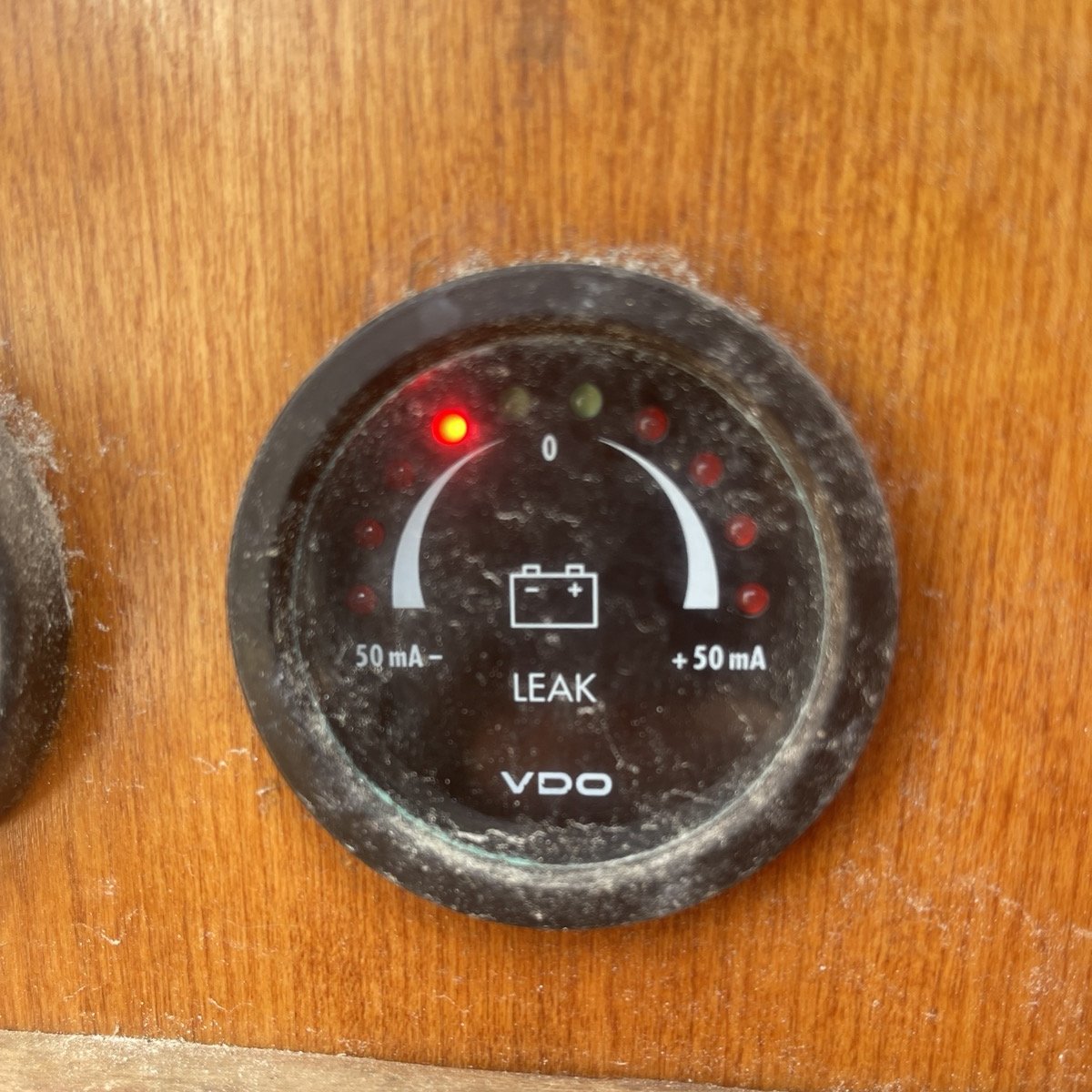
The famous VDO tester: green = not quite sure, red = panic.
Then came a long refit, with contractors who caused not one but THREE different leaks:
- a screw through a ceiling panel that pierced the router’s NMEA cable;
- a spotlight with damaged insulation on the positive side, leaking only when it was switched on;
- the engine control cable bracket, screwed into the steering console and connected to the engine — itself connected to the negative.
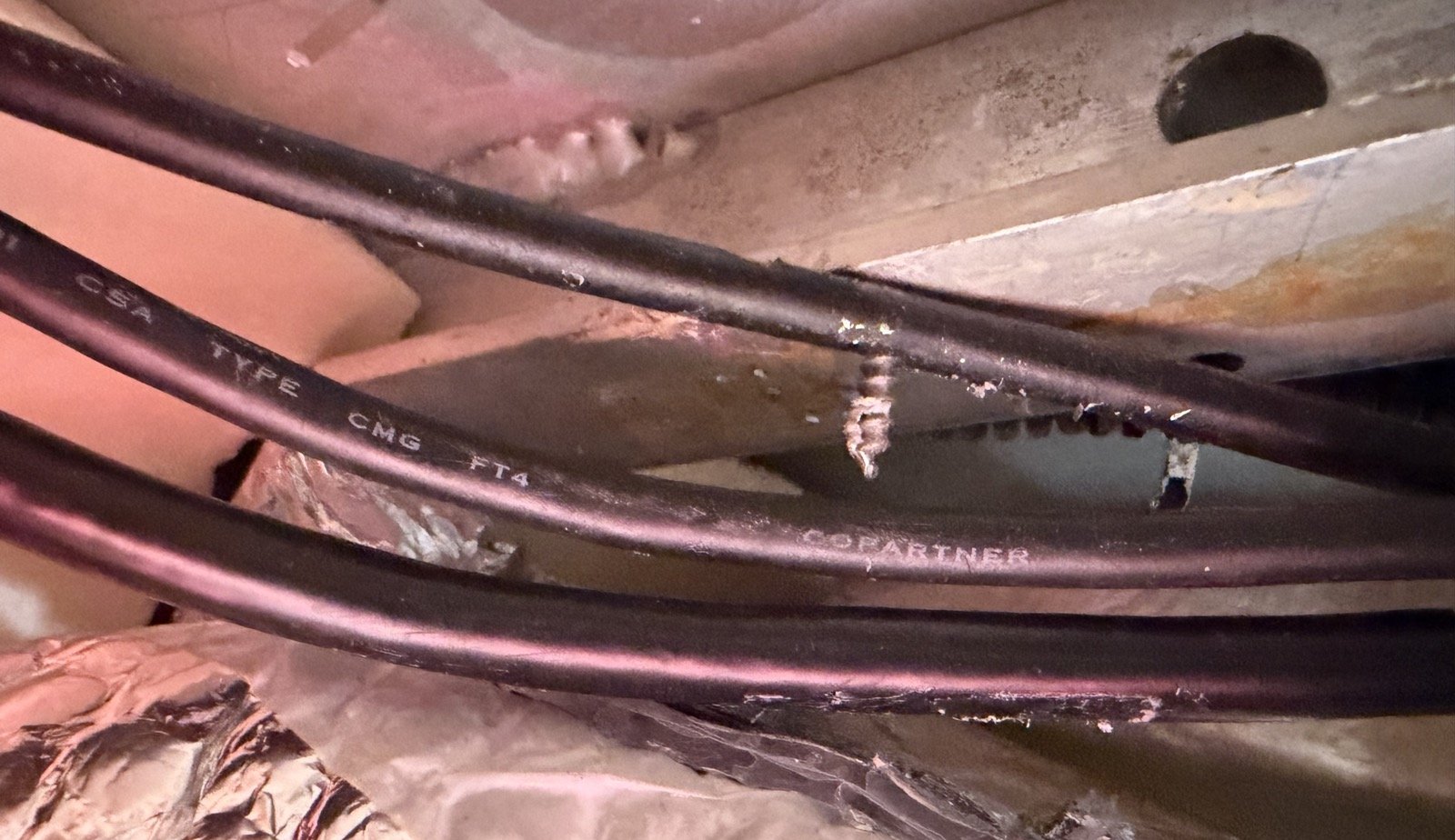
Exhibit A: the ceiling-panel screw, straight through the cable.
On top of that came a more classic leak that came and went with the rainfall (a poorly sealed mast step, with a bilge pump right below it).
Each of these leaks resulted in countless trips back and forth between the electrical panel and the tester, which are of course installed five metres apart: unplug a cable, test, unplug the next cable, and so on. As these episodes began to cause premature baldness, I started dreaming of a better tester.
The tester I dreamed of
- A tester that would sound “by itself” when a leak appeared, and send me an email to warn me.
- A tester that would show me trends, along the lines of “well well, the electrical leak grows when it rains”.
- A tester able to catch episodic leaks, along the lines of “only in the evening, when the aft cabin light is on”.
- A tester able to handle all my battery banks independently (engine, house, the bow thruster’s 24 V…).
- A tester that would beep when the leak changes, saving me a lot of round trips.
- A tester that would give me the exact size of the leak (in ohms) rather than an approximate LED.
- A tester that would detect small degradations (say from 100 kΩ to 80 kΩ) long before my faithful VDO turned red.
It did not exist, and I really needed it, so I built it.
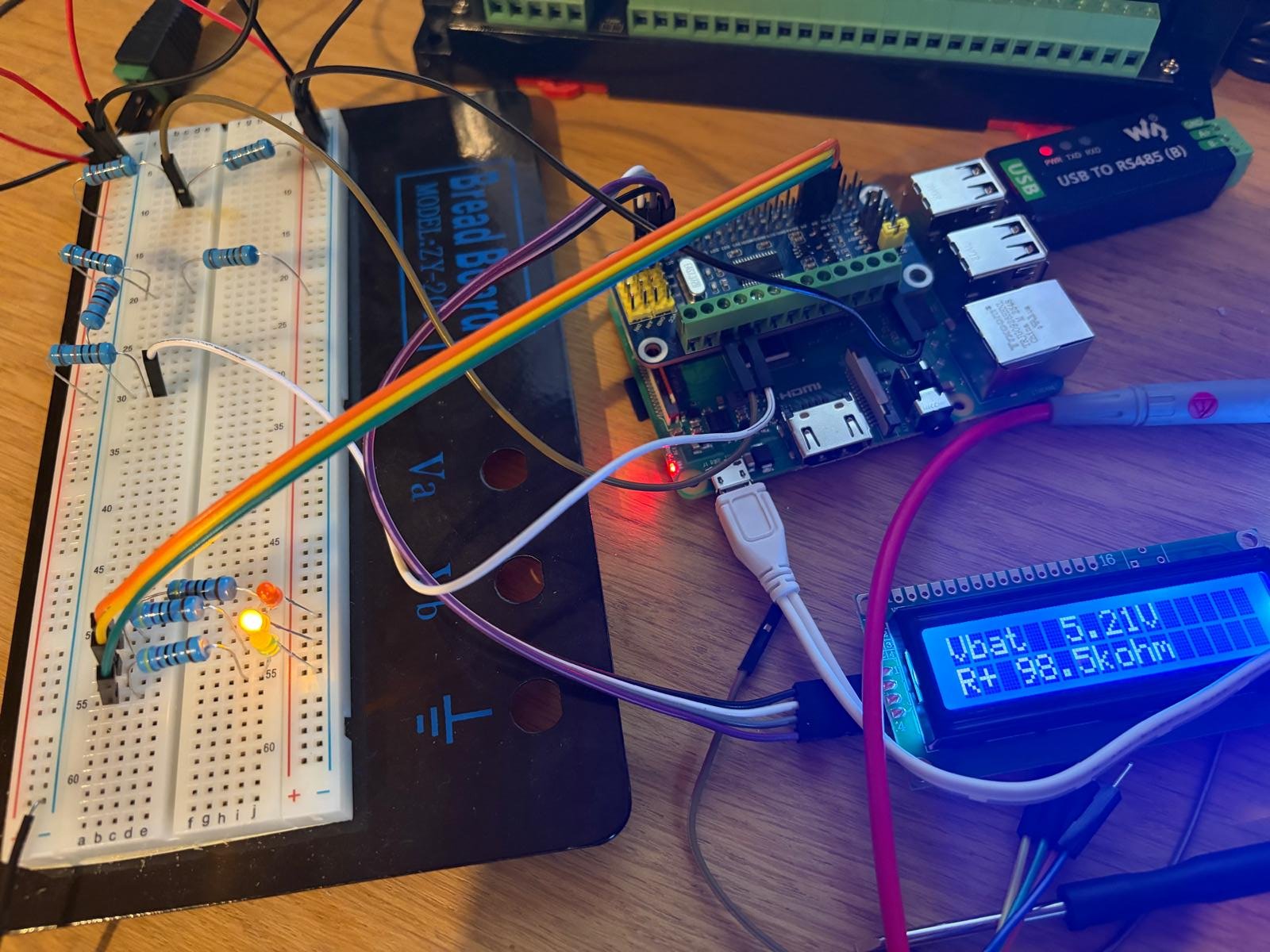
The proof of concept: a breadboard, a Raspberry Pi — and already a real reading in ohms on the display (R+ = 98.5 kΩ).
From prototype to product
I started with a prototype to validate the concept, installed it on my sailboat, and every single person who saw it told me “you should sell this”.
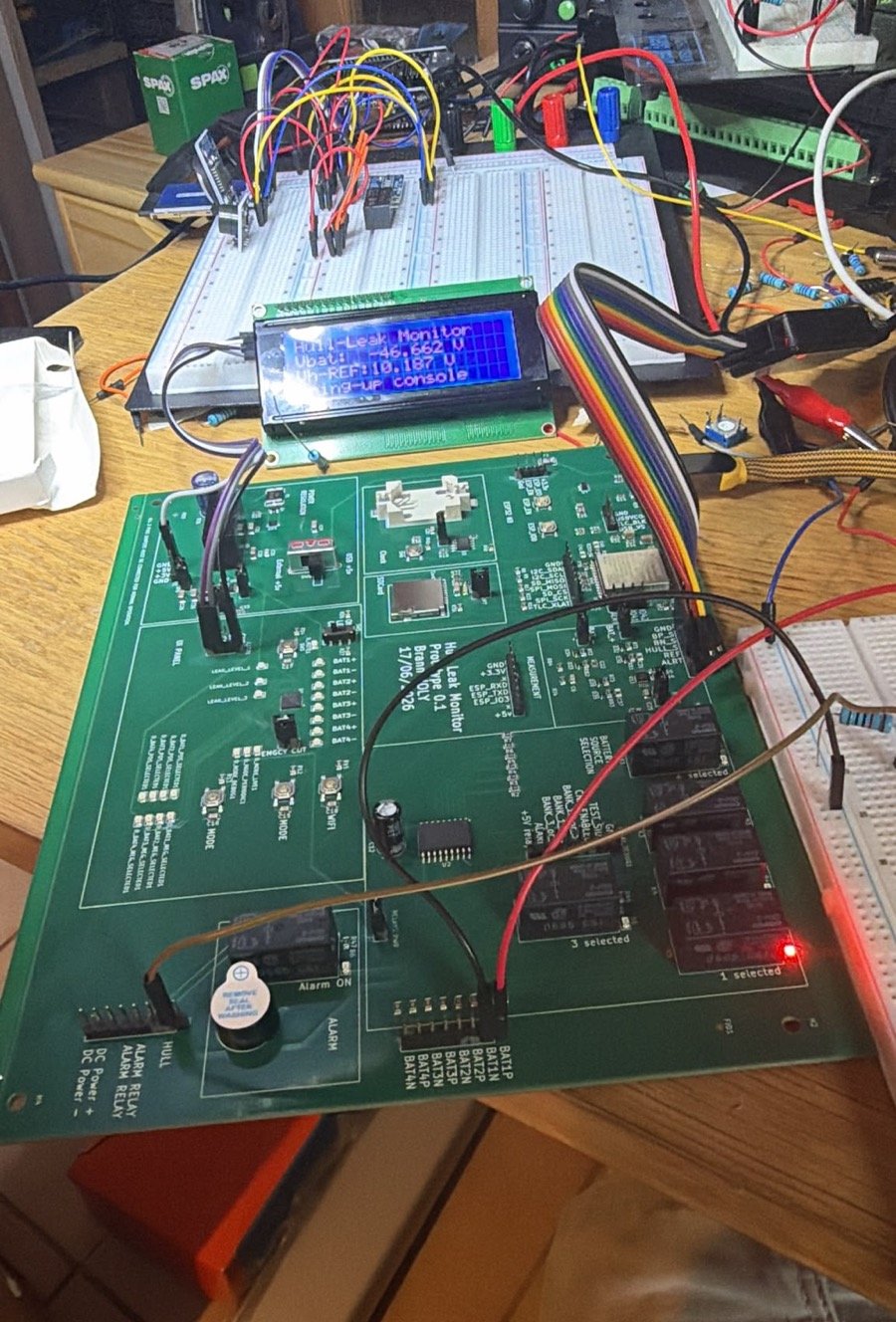
The first working prototype during bring-up — the POC breadboard is still sitting right behind it.
So I built a first “real” version with:
- a proper enclosure;
- a “pro” front panel;
- a power input protected against big surges (think an alternator load dump), reversed connections, and so on;
- quality components (precision resistors, relays certified to last, etc.).
Industrialisation begins
At the end of September, at the Grand Pavois boat show in La Rochelle, I had the opportunity to present HullSentry to a few aluminium-boat professionals, and their feedback was very positive: the problem is real for their customers, and they are interested in the product! Several of them asked me to get back in touch as soon as I have a test unit to install on their sailboats. A matter of a few weeks, if all goes well!
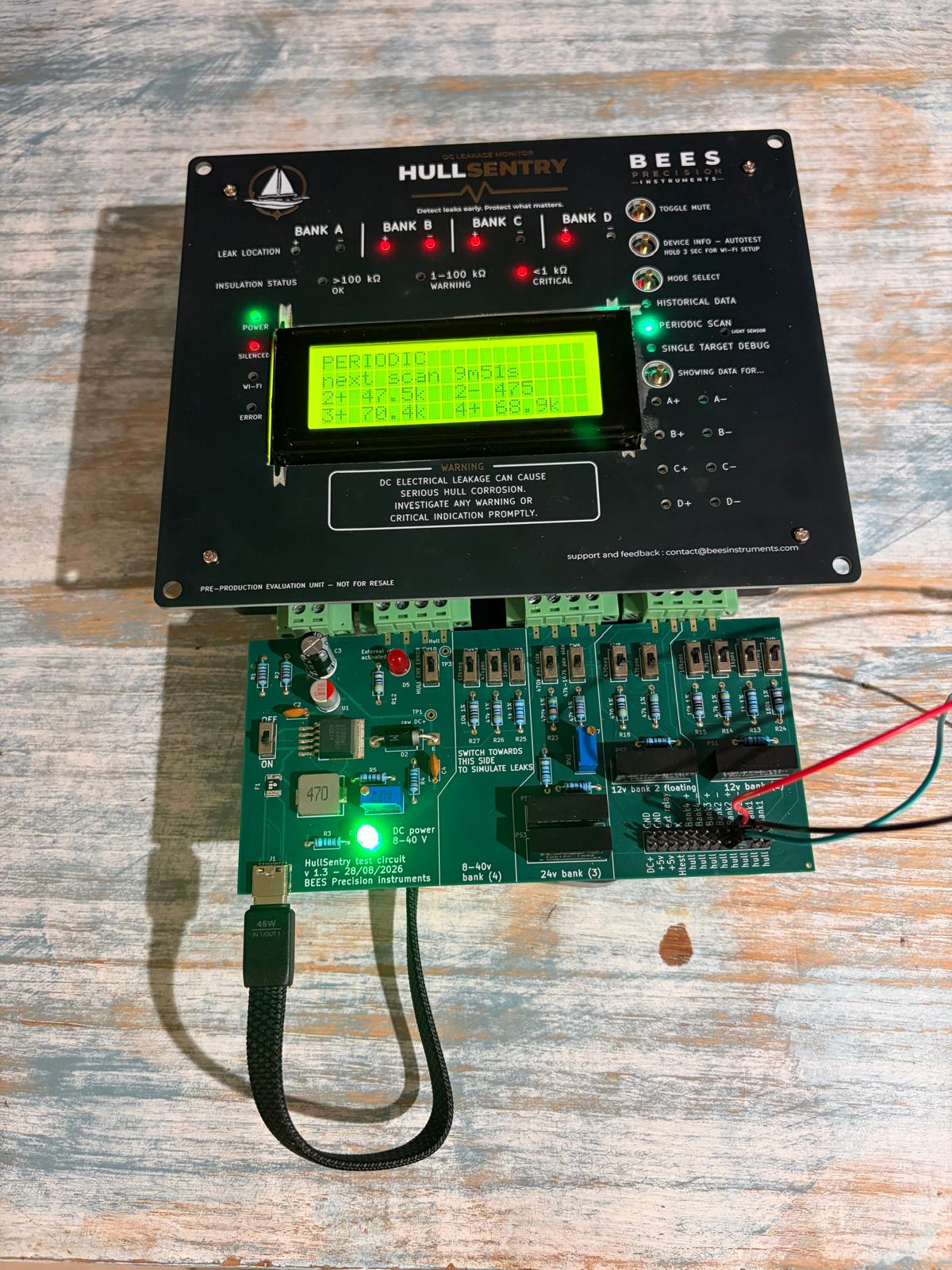
The demonstration prototype.